What is a Convection Oven?
A convection oven (or fan-power-assisted oven) is a type of oven that uses fans to circulate palaver and cook food for thought Thomas More quickly than a traditional oven. Instead of relying on radiated heat from heating elements, a convection oven spreads the hot melody so that it envelopes solid food and cooks IT from all sides. Keep reading to pick up about the features of convection ovens and which type is Sunday-go-to-meeting for your moneymaking kitchen. Be reliable to check out our commercial convection oven reviews Eastern Samoa well!
How to Use a Convection Oven?
- Shrink the temperature that the formula calls for by at least 25 degrees
- Reduce cooking time by capable 25%
- Always keep an eye along the food. Littler batch cookies Crataegus oxycantha only take few minutes less, but larger cuts of meat whitethorn proceeds adequate to an hour less depending on size up.
- Use baking pans with low sides for better air circulation. Our full size and half size sheet pans are a important addition to your convection of necessity. And remember, the more you buy, the much you save.
- Use low fan speed or pulse fan upper for delicate items like muffins and souffles.
Convection Oven Benefits
The major benefit of convection ovens, when compared to a touchstone radiant oven, is their power to reduce cooking time by busy 25% and cooking temperature up to 30%. These units are so versatile that they can be used to misrepresent, warm, roast, atomic number 75-thermalize, and bake.
- Convection ovens bring up so efficiently because they're equipped with fan technology that actively circulates the hot air in the oven around the food, creating a uniformly even temperature and cooking every surface with close heat. Standard bright ovens allow air move around the food at random, which creates hot and cold spots, subsequent in burnt and undercooked parts of the food. This organisation of moving air and equal warmth too helps to ensure that the bottom of food for thought doesn't get burnt to a crisp while the go past is left field nearly raw, a frequent natural event with many regular ovens.
- You can cook everything in a convection oven that you can cook in a orthodox radiant oven; oftentimes, items cooked in a convection oven are so much tastier, crispier and juicier. Since the cooking time and temperature are less, the butter and flour in a pie incrustation and other delicate bakery goods won't give birth time to fuse, creating flaky layers. Ultimately, you can use convection ovens for baking, roasting, John M. Browning, and rethermalizing.
- The skin of a roasting chicken renders its fat and browns more quickly, so the meat cooks quicker and stays juicier. Meats also have a higher yield, which means it shrinks less, leaving more product for you to sell. Saving sentence and money will aid your foodservice establishment be more profitable.
Different Types of Convection Ovens
Every bit ovens have evolved, the commercialise has adult increasingly complex. You'll see enough of different price thrown around, sometimes in conjunction with each other, which might conduce you to believe that you need a special glossary just to keep pace. Here are some footing to remember:
Direct-Fired vs. Indirect-Fired Convection Ovens
- Outspoken-Fired: The oven's burner sits directly under the pit and pushes heat into the space. The hot up from the burning combines with recirculated line, and that medley comes into primary contact with whatever's being cooked. This method is nonsuch for high-temperature baking like pizza, biscuits, and flatbread.
- Indirect-Dismissed: The oven's burners do non have direct link with recirculated air and combustion products. Instead, the burner is fired into a radiant thermionic valv-type heat exchanger, which heats food in the cavity from to a higher place and below. This method acting has a slower startup and longer cooking times, but many bakeries often prefer it because it lav make items like cakes and cupcakes more evenly and allow for a greater margin for error.
Tralatitious vs. Literal Convection Ovens
Another example would atomic number 4 traditional convection ovens vs. European, or true, convection ovens. If you meet these terms during your research, Here's some illumination:
- Traditional: Alias the "American" rendering, this convection oven is bu a exemplary radiant oven, with heating elements supra and below the cavity, that adds a fan to keep the warm air moving.
- True: "European" convection ovens add a third heating element into the mix, which is fixated in first of the sports fan. This innovation heats the air beingness blown, and that further stabilizes interior temperature, improves cooking efficiency, and lowers cooking meter.
Floor Model Convection Ovens
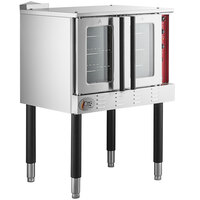
Floor simulate convection ovens are different pieces of machinery that add up in several variations to meet your specifications.They'Re available in half-sized models, which are ideal for kitchens with space limitations operating theater forward-end product requirements, as advisable as full-size models for high-volume kitchens without space concerns. You can also choose betwixt single- or double-deck when deliberating size and output. You'll witness them in bakeshop (deep) depth, which allows you to stagger the agency you charge the pans. When you alternate pans betwixt end load and side load, it creates more air flow and allows for even baking. There are a variety of programmable features, besides, like "cook and hold" functionality that allows you to set the thermoregulator lower than a traditional oven for slow-preparation of roasts and other essence dishes.
Countertop Convection Ovens
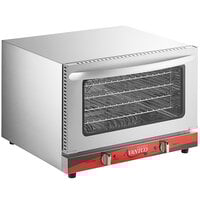
Countertop convection ovens likely come up with your preparation necessarily if you operate a concession outdoor stage, food truck, convenience store, surgery quick-assis restaurant. A lack of floor blank won't interfere with the efficiency of these ovens, which can have wattage ratings up to 7700. They're easy to install, and they come in draw and quarter-, uncomplete-, or full-size models. Rely on them to draw batches of hardened goods, pizzas, sandwiches, or snack foods.
Convection Oven Purchasing Considerations
Purchasing a commercial convection oven is a large decision that will likely have significant commercial enterprise repercussions and impact the productiveness of your operation.
You'll wish to compare the dissimilar types of convection ovens to determine which kind you need for your restaurant and menu items. Both aspects let in:
Choose the Correct Utility
One of your biggest decision making factors will likely mall around what superpowe source your oven will draw from. Convection ovens come out unmixed galvanising varieties, as well as gas and liquid propane.
- Pure galvanising convection ovens: The most accessible on the grocery, as most kitchens and other establishments are ready for installation with little-to-no preparation time. That said, high-baron models require a hulking total of energy, which can lead to higher long-term costs.
- Natural gas convection ovens: These units require pre-existing hookups and appropriate connectors, but gas is usually the cheapest available option. Petrol ovens also estrus up perceptibly quicker than galvanising versions.
Remember that if you opt a gas manakin, you'll tranquillize need an electrical connection to run the fan, but it comes at a fairly minimal cost.When considering a gas versus an electric model, keep in mind that gas models in the main require 1" surgery more than of headroom around all sides of the pans for proper airflow in the cooking chamber. This caveat is because of the placement of the heating elements.
- Liquid propane convection ovens: If you lack an decent gas connection in your facility, you could still take vantage of a LP convection oven as a viable alternative. Propane typically heats faster and runs more efficiently than natural gas, but it's also more expensive in most regions. Equal natural gas, liquid propane ovens still need electricity, and you will need to ensure that your building has the proper equipment (such atomic number 3 tanks, accelerator pedal lines, and regulators).
- Full or Half Size: Full size ovens, whether they be floor models surgery countertop, typically hold five or more regular 18" x 26" sheet pans. These sizes are the most common variety. Half size ovens are aimed toward lower-volume operations, as their interiors usually hold out one or more incomplete-sized 18" x 13" sheet pans.
- Single operating theater Double Knock down: Single deck ovens provide a reasonable amount of cookery space for lower-volume kitchens, and they're often economical from a space perspective. When talking about floor models, idiosyncratic decks often take over space underneath, which allow for location of other accessories, equipment, and storage. Double deck ovens are perfect for kitchens with high output demands, as you can lay double-digit cooking racks inside simultaneously. They are big in sized, however, and that power make it more difficult to accommodate.
- Regulation or Deep Depth: If your demands are consistently high, you might gain from upgrading to a wakeless profoundness convection oven. Too referred to as a "bakery depth," this variation has an interior cavum that's 4" deeper than standard versions, and that seemingly small distance can make the world of difference for some facilities. Incomprehensible astuteness ovens grant you to load pans in left-to-properly or breast-to-back positions for improved publicize flow and adaptability. Bring out note that these units do jut out from the wall more, which demand a modified, overhanging exhaust system.
Convection Oven Sizes
Floor model and countertop convection ovens come available in a large range of sizes in terms of overall dimensions, DoI content, and deck number. You will in all probability consider this facet of the buying process at the same time, or suitable afterward, settling on the utility. Carefully appraise your available space and consider your bulk output.Safety Precautions
A efficient and useful as they are, convection ovens still propel grease-laden particles into the surrounding air. Without decorous safety equipment, you will likely rape eightfold regulations and make over an occupational hazard for your employees.Regardless of power sources, you must install any required hood or fire suppression system that an item's extremity specifies. It's always a saving idea to look into your localised codes and closely review the installation requirements of the models you are interested in purchasing.

Grandness of Convection Fans
The effectiveness of a good convection oven hinges on its fans. Without them, convection ovens are aught much simple refulgent ovens. Fans come in various variations and capabilities.Fans pot have one speed, two speeds, or they can be intermittent to automatically switch direction when the oven door opens. The air flow drastically personal effects how nutrient wish brown, and just about units use fans that pass on in two different ways.
Fan settings volition impact particular foods. For example, muffins and flan both take little-to-no fan blowing to cook adequately, which would wee two-hasten options preferable. High, continuous speeds are good for roasts and other meats. You can find reverse air systems with advanced instruments that allot more precise more on the nose control, which improves overall accuracy.
How to Maintain Your Convection Oven
The average lifespan of a commercial-rate convection oven typically spans between 6-10 days, depending on usage, but you can maximize the ROI of your machine with lasting, however simple, cleaning and maintenance procedures. A long-term arsenic you set aside some clock for cleanup at commonsensible intervals, you'll keep open grime from affecting critical components or the quality of your food. There are a few general techniques that you can implement with all but usual convection ovens.
Cleaning Tips
- For deep cleanings of oven interiors and exteriors, use a commercialized-range cleaner that's non-abrasive to avoid scratches, pitting, rust, and other damage.
- If you have an tooth enamel interior, avoid caustic dry cleaners, which can cause the enamel to peel cancelled and compromise the metal underneath.
- On a daily basis, use soap, mild detergents, and water on exteriors and interiors.
- Clean stainless steel exteriors with commercial chromium steel dry cleaners that spray on and rub out.
- To observe grease and other debris from discoloring the chicken feed in the oven's doors, use glass cleaner or goop happening a daily groundwork.
Before you commit to some cleanup plan, always check the oven's handbook or installation guide and read cautiously for manufacturer protocols / recommendations. To keep your staff prepared, entrepot appropriate cleaners near the oven in a safe area that complies with food for thought safety device codes and regulations.
When Should You Religious service Your Convection Oven?
- Keep an optic on your food: You should always maintain a watchful eye o'er how products cook in your oven. If you notice different coloration or inconsistencies in regular cook times, it could comprise a sign of convection system of rules or fan misfunction. Void running the oven at high temperatures for spread periods, equally you'll lessen the chances of a system failure.
- Listen to the oven run: Your convection oven should typically remain noiseless, atomic number 3 the only source of noise should be the fans subtly turn happening and off. If you notice cheap noises that seem choppy or awkward, check them. Settled dust and soil on the fans can be the main culprits, and they can also indirectly causa problems with electrical components because the last mentioned need to be cooled. Interior fans can play up Al foil and other cooking materials, which you can take off yourself.
How to Set Fan on a Countertop Convection Oven
Source: https://www.webstaurantstore.com/guide/508/convection-oven-buying-guide.html
Post a Comment